


Lumi Drama
StorySpark
Short-drama apps are built for the moments when I have only a few minutes but still want a story with momentum. Lumi Drama, a free personalization app from StorySpark, takes that idea and puts quick, swipe-led viewing at the center. After spending time with it, I found the appeal easy to understand: each short story is designed to invite one more episode, and the swipe gesture makes browsing feel lighter than choosing a full-length show.
That convenience also depends heavily on the quality of the connection around you. Lumi Drama is most enjoyable when the next piece of a story appears without interruption, while weak or unstable service can turn a fast entertainment break into a sequence of pauses and retries. My overall impression is therefore mixed but useful: this is an accessible way to sample short dramas on a phone, yet it works best when you treat it as a connected viewing experience rather than a dependable companion for every kind of travel.
How the short-drama format feels in everyday use
The first thing I noticed is that Lumi Drama is less about sitting down for a planned viewing session and more about making a small pocket of time feel occupied. A queue at a shop, a lunch break, or the few minutes before an appointment can become a chance to watch a scene and decide whether to continue. The swipe-based discovery style reduces the effort of browsing, which matters when I do not want to compare a long list of titles or commit to a conventional series.
The format rewards curiosity. A short episode can end just as a conflict becomes interesting, encouraging me to continue instead of closing the app. That structure is effective for viewers who enjoy cliffhangers and quick emotional turns. It is less satisfying for someone who prefers slow character development, carefully paced episodes, or a complete story in one sitting. Lumi Drama is built around immediate engagement, so its strongest use case is casual, repeated viewing rather than deep, uninterrupted immersion.
I also think the personalization category is relevant here. This is not simply a general video player where I bring my own collection. Its purpose is to help me discover short dramas through the app’s own viewing flow. That makes it more convenient than manually searching video platforms when I want something new, but it also means the experience depends on whether the available recommendations match my taste. If the suggestions do not appeal to me, the swipe mechanic can become a fast way to reject content rather than a meaningful discovery tool.
Related News

Why WhatsApp Messenger Still Makes Everyday Communication Feel Easy

Jurassic World: The Game Is the Better Dino Tycoon for Strategic Players

Threads in Real Life: Who Should Join, Lurk, or Leave

How SHEIN Turned Shopping Into an Endless Content Feed

How to Make Fortnite Feel Smarter on Mobile

Should You Switch to Microsoft Outlook on Mobile?
Why connectivity matters more than the swipe gesture
The swipe interaction feels natural when the connection is stable. I can move from one possibility to another without much thought, and that low-friction rhythm suits short-form entertainment. However, the gesture itself is not the main reason the app succeeds. The real test is what happens between swipes: whether the next story loads promptly, whether playback remains smooth, and whether an interruption breaks the emotional timing of a scene.
On a reliable home or office connection, Lumi Drama makes sense as a quick entertainment shelf. On a crowded public network, the experience becomes less predictable. A short episode has little room for technical disruption; even a brief pause can feel disproportionately annoying when the whole point is instant viewing. For me, this is the first important trade-off: the app feels more spontaneous than traditional television, but its spontaneity is tied to network conditions.
I would not choose it as my only entertainment option for a long journey unless I had already tested how it behaves with the connection available. A conventional downloaded show has a different advantage because its viewing quality is not tied to the signal at the exact moment I press play. Lumi Drama is better suited to connected breaks, where I can comfortably move on if a story does not load or the network becomes unreliable.
Gallery
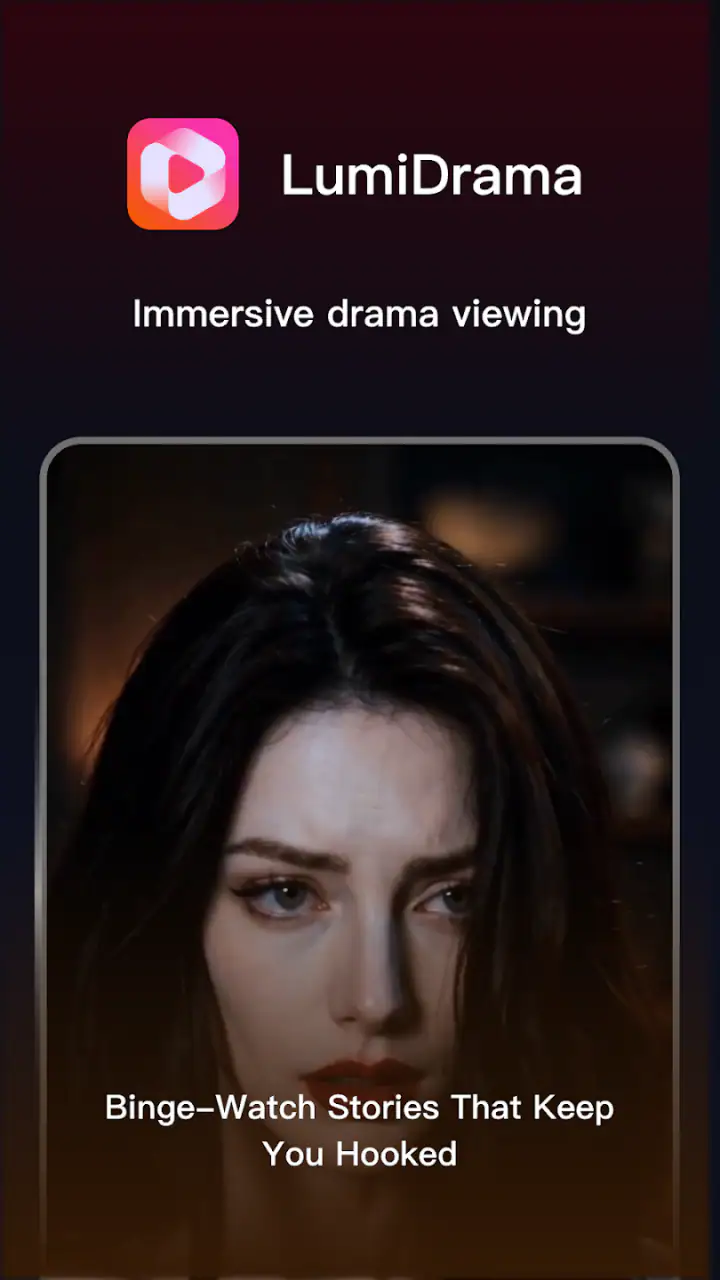
Mobile situations where it fits best
The app’s phone-first design is most useful when my attention is divided. I can sample a story while waiting for an appointment, watch a short sequence during a break, or use it as a lighter alternative to scrolling through social feeds. The short-drama focus gives those moments more structure than endless general-purpose browsing. I am not merely looking at isolated clips; I am following narrative progress, even if the viewing session is brief.
A realistic example is a commuter who has a reliable connection for part of a daily route. During the first part of the trip, Lumi Drama can provide an easy way to discover a story. If the train enters an area with poor service, though, the experience may lose its rhythm. That person should think of the app as something to use during the dependable portions of the journey, not as a guaranteed solution for the entire ride. The distinction sounds small, but it prevents a lot of frustration.
Screen size also shapes my opinion. Short dramas are easier to follow on a phone than a conventional full-length production because the commitment is smaller, but the compact display still favors close viewing. I would use it personally when I can give the screen at least moderate attention. It is not the right choice when I need background entertainment while doing something that requires focus, because missing a few quick scenes can make the next episode harder to understand.
For families, the Everyone content rating makes the app broadly approachable from an age-label perspective. That does not automatically mean every story will suit every household’s personal preferences, so I would still make viewing choices with the individual viewer in mind. The rating is useful as a general starting point, but it should not replace ordinary parental judgment about what a child enjoys or should watch.
What happens when the connection is weak
Connectivity problems are especially noticeable in an app built around continuous discovery. If a clip stalls while I am browsing, the interruption is not just a technical delay; it breaks the decision-making loop that makes the app feel fast. Instead of asking whether I want to watch the next story, I start asking whether the next screen will appear at all. That change in mindset is the clearest weakness I experienced with this kind of design.
Recovery is easier when I treat the app patiently rather than repeatedly swiping or tapping. My practical approach is to pause for a moment, check whether other apps are also struggling, and then retry the current action once the connection settles. Rapidly repeating actions during a poor signal can make the experience feel more chaotic, especially when I am unsure whether the previous gesture registered. A slower recovery habit is less exciting, but it gives me a better chance of understanding whether the problem is temporary.
I also recommend avoiding a first test in a situation where every minute matters. If I am about to board a vehicle or walk into a meeting, Lumi Drama is not the place to discover whether the current network is dependable. Testing it earlier, while I have time to close and reopen the viewing session if needed, gives a more honest impression of how it fits my routine. This is a small but useful workflow change: evaluate the app under normal conditions before relying on it during a constrained moment.
When a viewing session is interrupted, the emotional cost depends on the story. A pause during a casual discovery swipe is easy to tolerate. A pause at a dramatic turning point is much more irritating because the app has already earned my attention. That is why network reliability matters more here than it might in a static personalization app. The content is designed to pull me forward, and every interruption pushes in the opposite direction.
Using Lumi Drama without wasting mobile data
Because the app centers on watching video, I would be thoughtful about when I use it on cellular service. A few short episodes can feel harmless individually, yet repeated viewing during commutes or breaks can turn into a substantial part of a monthly allowance. I would start with a simple personal rule: use a trusted Wi-Fi connection for exploratory browsing, then reserve mobile viewing for moments when I genuinely want to continue a story.
That approach has another benefit besides data awareness. It helps me separate intentional viewing from automatic swiping. When discovery is effortless, it is easy to keep moving through stories without deciding whether I actually want to watch them. On a limited connection, choosing more carefully makes the session more satisfying. I would avoid leaving the app running while distracted, and I would close it when I am finished rather than letting an idle viewing habit consume attention and connectivity.
I would also be cautious with public networks. A busy connection can make playback inconsistent, and an unfamiliar network may not be suitable for every personal activity. Lumi Drama itself is an entertainment app, but the broader lesson is simple: convenience should not encourage careless connection choices. If a network feels unreliable or uncomfortable to use, waiting for a trusted connection is the sensible option.
The free entry point makes trying the app easy, but the in-app purchase range deserves attention before spending. Individual items can range from forty-nine cents to nearly two hundred dollars, so I would not tap through purchase screens casually. That wide range makes it especially important to read each confirmation carefully and keep purchases intentional. For someone who only wants occasional short dramas, the free access may be enough to judge the experience before considering any paid option.
Where it stands beside familiar alternatives
Compared with a general video platform, Lumi Drama offers a narrower and more focused path into short narrative content. A large video service usually gives me broader search tools, more varied formats, and a familiar library structure. Lumi Drama’s advantage is immediacy: I can open it for short dramas without sorting through unrelated videos. The trade-off is flexibility. If I want documentaries, long films, creator channels, or a very specific title, a general platform is likely the better destination.
Compared with social-media feeds, Lumi Drama has a clearer storytelling purpose. Social feeds may deliver faster novelty, but they can scatter my attention across unrelated clips. Here, the short-drama framing gives my viewing a stronger through-line. On the other hand, social platforms often make it easier to share, comment, or move across many types of content. I would choose Lumi Drama when I want narrative discovery, not when I want a broad social browsing experience.
Compared with a traditional streaming service, the difference is commitment. A conventional service is better when I have time for a film or a longer episode and want a more deliberate viewing session. Lumi Drama is more suitable when my available time is uncertain. The choice comes down to rhythm: planned viewing favors the traditional service, while fragmented breaks favor this app. Neither replaces the other in my routine.
There is also a practical difference in how I make decisions. Lumi Drama encourages me to decide quickly through swiping, while a standard catalog encourages me to inspect descriptions and choose deliberately. That can be refreshing when I feel overwhelmed by menus, but it can also make the experience feel shallow if I want context before investing in a story. I would use the app as a discovery lane rather than expecting it to provide the same depth of catalog control as a larger streaming product.
Who should try it and who should skip it
I would recommend Lumi Drama to someone who enjoys cliffhanger-driven stories, watches mainly on a phone, and often has short periods of free time. It is particularly appealing if the idea of swiping through dramatic possibilities sounds more enjoyable than browsing a large, crowded library. The app’s free price makes experimentation straightforward, and the Everyone rating gives it a broad starting point for potential users.
I would be more hesitant to recommend it to someone with a strict mobile-data limit, an unreliable daily connection, or a strong preference for offline viewing. The same is true for viewers who dislike rapid pacing or want complete control over what they watch next. A downloaded library or a conventional streaming service would be a better match in those cases. Lumi Drama is not a universal replacement; it is a specific tool for connected, short-form story discovery.
The current version is 4.1, and the app supports Android devices running version 7.0 or later. That makes it accessible to people using older compatible phones, although the real-world experience will still depend on the device, display, and connection. I would check the operating-system requirement before installing, then judge the app on the phone I actually plan to use rather than assuming a newer device is necessary.
What the rating suggests about expectations
Lumi Drama has an average rating of 2.1 from around forty ratings, with six written reviews, and it has passed ten thousand installs. I would read that combination as a reason to approach the app with measured expectations rather than as a final verdict on every user’s experience. The audience is large enough to show that people are trying it, but the low average means I would pay close attention to performance and fit instead of assuming the concept works smoothly for everyone.
For me, the rating reinforces the importance of testing the app in my own normal setting. If my connection is dependable and I enjoy short, serialized drama, I may find the format worthwhile even if other users have had a poor experience. If I already know that interruptions, quick pacing, or swipe-based discovery annoy me, the rating gives me little reason to overlook those concerns. The sensible approach is to try it without spending money first and decide whether the viewing flow earns a place in my routine.
My connectivity verdict
Lumi Drama succeeds most clearly as a quick, connected way to discover short dramas on a phone. I like the low commitment, the fast browsing rhythm, and the way a few spare minutes can become a small narrative session. StorySpark has chosen a focused concept rather than trying to turn the app into a general entertainment library, and that focus is useful when I know I want short dramatic stories.
Its main limitation is equally clear: the experience is only as spontaneous as the network supporting it. Weak service can interrupt browsing, damage the timing of a cliffhanger, and make a supposedly effortless break feel like troubleshooting. My best advice is to use it on a reliable connection, be deliberate with cellular viewing, and treat the free access as a trial rather than rushing toward purchases.
Lumi Drama is worth trying if your ideal viewing session is short, mobile, and story-driven, but it is not the app I would depend on for disconnected travel or carefully scheduled viewing. I would keep it as an occasional discovery option alongside a more dependable downloaded or traditional streaming choice. That balance lets the app do what it does well without asking it to solve a problem it was not designed to solve.
FAQs for Lumi Drama
What is Lumi Drama, and what kind of content does it offer?
Lumi Drama is an entertainment app focused on short-form dramatic stories and episodic video content designed for quick viewing sessions. Its library may include romance, suspense, family conflicts, and other emotional storylines. Before downloading, users should check the current catalog, supported languages, regional availability, and whether the app’s content matches their preferred genres and viewing style.
Is Lumi Drama free to download and use?
Lumi Drama may be available to download at no initial cost, but access to all episodes or premium features can depend on in-app purchases, subscriptions, advertisements, or virtual credits. The exact payment model may vary by region and app version. We recommend reviewing the pricing page and subscription terms carefully before starting a trial or confirming any purchase.
Does Lumi Drama require an internet connection?
An internet connection is generally needed to browse the catalog, load video episodes, synchronize account information, and stream content. Depending on the version of the app, selected episodes may or may not support offline viewing. Users with limited mobile data should use Wi-Fi when possible and check whether video quality can be adjusted to reduce data consumption.
Is Lumi Drama suitable for children and teenagers?
Lumi Drama may contain mature themes commonly found in dramatic entertainment, including relationship conflicts, intense emotional situations, violence, or suggestive material, depending on the individual series. Parents and guardians should review the app’s age rating, content descriptions, and available parental controls before allowing younger users to access it. The suitability of each show can differ.
What permissions and account information does Lumi Drama request?
During installation or use, Lumi Drama may request permissions or information needed for account creation, personalized recommendations, notifications, payment processing, and technical performance. The exact requests can change between Android and iOS versions. Before accepting, users should review the app-store privacy details and Lumi Drama’s privacy policy, especially if they prefer not to share optional personal or usage information.
Pros
- Large catalog of Asian dramas and entertainment content.
- Simple interface makes browsing and discovering titles easy.
- Video playback is generally smooth on a stable connection.
- Subtitles help make international shows accessible to more viewers.
- Regular content updates give users new episodes to explore.
Cons
- Some titles or episodes may require a premium subscription.
- Ad interruptions can reduce enjoyment for free users.
- Subtitle quality and availability may vary between shows.
- Streaming quality depends heavily on internet speed and stability.
- The app may not be available in every country or region.


